
Breaking through to 4.0 level play requires more than just understanding the rules and basic shots. You need precision, strategy, and the ability to execute under pressure.
These targeted pickleball drills for 4.0 players will help you develop the specific skills that separate intermediate players from advanced competitors. Let’s dive into the training that will sharpen your game and build the consistency you need to dominate the court.
Understanding 4.0 Player Skill Development
At the 4.0 level, you’re no longer just hitting the ball back and forth. You’re playing chess on a pickleball court, thinking two shots ahead and executing with purpose.
Characteristics of 4.0 level play include consistent third shot drops, strategic dinking with purpose, and the ability to maintain rallies while looking for opportunities to attack. You understand court positioning and can execute most shots with reasonable accuracy.
Key skill gaps to address typically involve shot selection under pressure, maintaining consistency during long rallies, and developing the soft touch needed for advanced net play. Many 3.5 players have the shots but lack the precision and decision-making skills that define 4.0 play.
The importance of targeted practice cannot be overstated. Random hitting won’t get you there. You need deliberate practice that addresses specific weaknesses while reinforcing your strengths.
Precision Third Shot Drop Drill
The third shot drop is your gateway to the kitchen line, and at 4.0 level, it needs to be automatic.
Setup and Execution
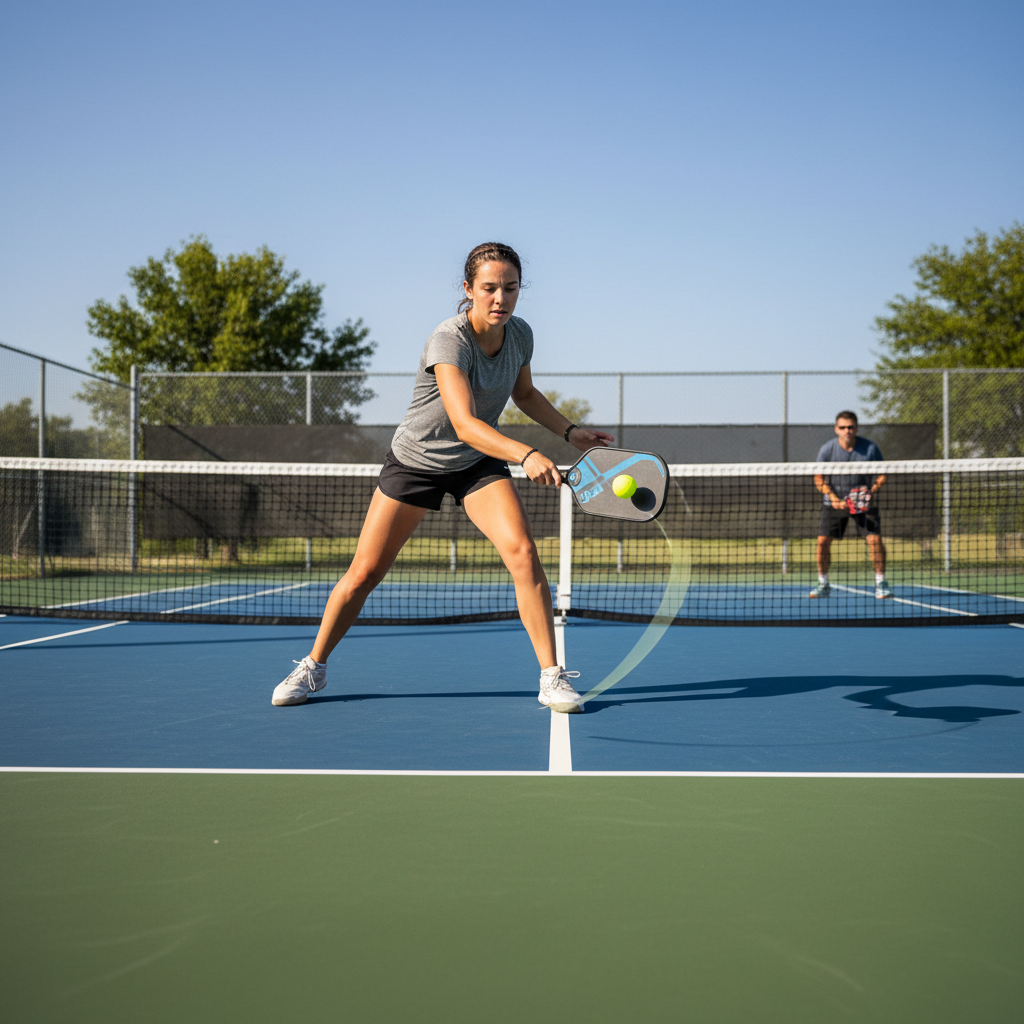
Position yourself at the baseline with a partner at the kitchen line. Have them feed you balls that simulate a return of serve. Your goal is to drop the ball into the kitchen consistently, landing within two feet of the net.
Start with 20 repetitions focusing purely on getting the ball in the kitchen. Once you achieve 80% success rate, begin targeting specific zones within the kitchen.
Proper Paddle Angle Techniques
Keep your paddle face slightly open and use an upward brushing motion. The key is controlling the pace of your swing - slower is almost always better. Think of painting the ball over the net rather than hitting it.
Pro tip: Practice with different ball speeds and spins. Your partner should vary their feeds to simulate real game conditions where returns come at you with different trajectories and pace.
Developing Soft Touch and Control
Work on landing balls at different depths within the kitchen. Practice dropping balls that barely clear the net, then gradually work on drops that land deeper in the kitchen when you need to push your opponents back.
Common Mistake: Many players focus so much on getting the ball low that they hit it into the net. Better to have a slightly high drop that lands in the kitchen than a perfect-looking shot that doesn’t clear the net.
Advanced Dinking Strategy Drills
Dinking isn’t just about keeping the ball low - it’s about creating opportunities and maintaining pressure.
Cross-Court Dink Variations
Practice cross-court dinks with your partner, focusing on changing the angle and pace. Start with straight cross-court dinks, then work on sharp angles that pull your opponent wide.
Spend 10 minutes on basic cross-court consistency, then add variation. Change the height by 6-12 inches, alter the pace, and practice dinks that curve back into the court after going wide.
Angle and Placement Precision
Set up targets in different areas of the kitchen using cones or towels. Practice hitting specific spots while maintaining the rally. This drill develops the precision needed to move opponents around the court.
Work on dinking to your opponent’s backhand, then immediately switching to their forehand. The ability to change direction while maintaining control is crucial for 4.0 level play.
Defensive Dinking Techniques
Practice dinking when you’re under pressure or out of position. Have your partner hit aggressive dinks that force you to stretch or move quickly, then focus on resetting the point with a controlled response.
Key Focus: Maintain your ready position between shots. Many players get lazy during dinking rallies and get caught off-guard when the pace suddenly changes.
Power and Placement Serve Drills
Your serve sets the tone for every point. At 4.0 level, it needs to be both consistent and strategic.
Serving Accuracy Exercises
Place targets in each service box and practice hitting them consistently. Start with larger targets (hula hoops) and gradually move to smaller ones (dinner plates).
Aim for 70% accuracy to large targets before moving to smaller ones. Focus on hitting the same spot three times in a row before changing targets.
Spin and Placement Combinations
Practice serves with different spins - topspin, slice, and flat serves. Each spin should have a specific purpose and target area.
Topspin serves should target the deep corners to push opponents back. Slice serves work well to the middle of the box, creating awkward angles for the return. Flat serves are best used sparingly for pace and surprise.
Targeting Specific Court Zones
Develop a serving strategy for different opponents. Practice serving to a right-handed player’s backhand (left side of the box from your perspective), then work on serving to their body to jam them up.
Pro tip: Keep a serving chart during practice. Track where your serves land and note which placements give you the best third shot opportunities.
Defensive Positioning and Reaction Drills
Defense wins points at the 4.0 level. You need to be in position before your opponent hits the ball.
Quick Lateral Movement Training
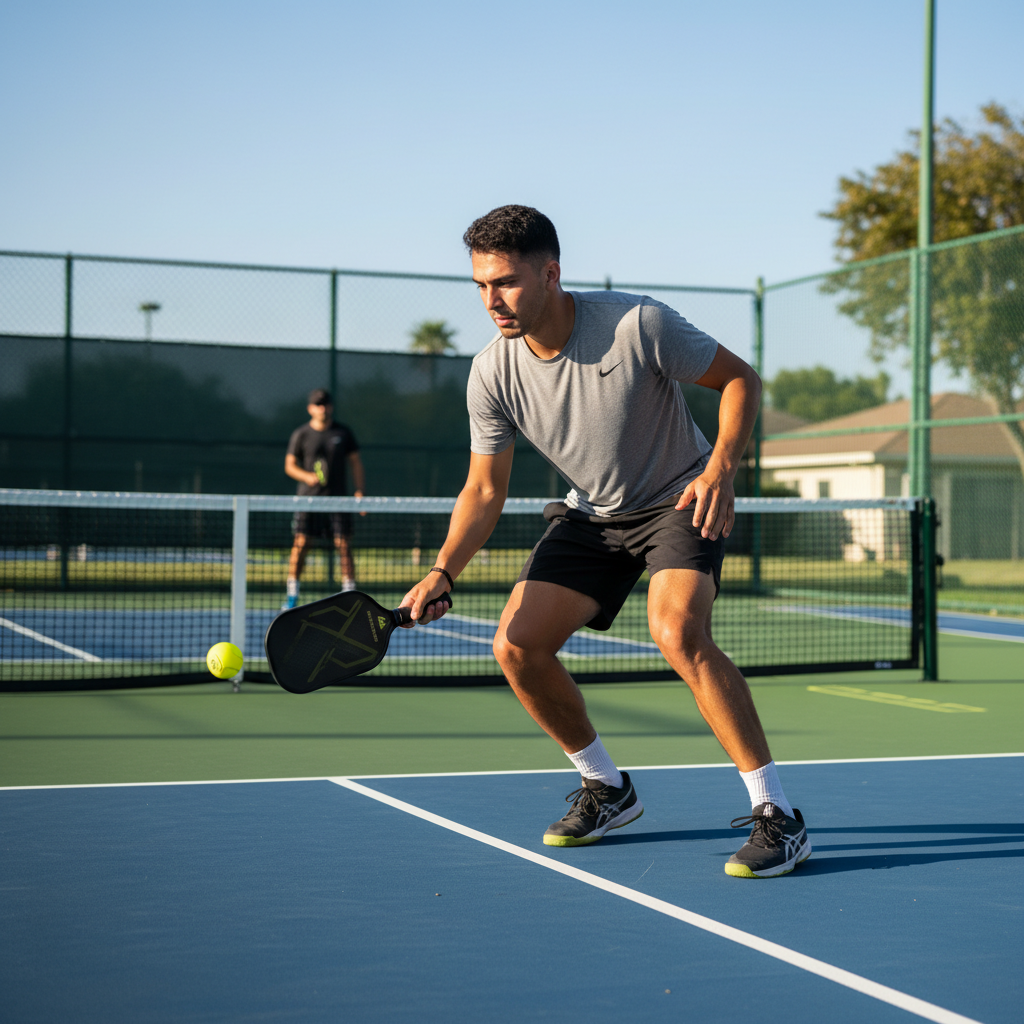
Practice side shuffles along the baseline and kitchen line. Focus on maintaining your ready position while moving quickly. Your paddle should stay in front of your body, and your weight should remain on the balls of your feet.
Set up cones 10 feet apart and shuffle between them, touching each cone with your non-paddle hand while maintaining proper form.
Anticipation and Reading Opponent Strategies
Work with a partner who hits balls to different areas of the court. Focus on reading their body language and paddle position to anticipate where the ball is going.
Start by having them telegraph their shots obviously, then gradually make it more subtle. The goal is to start moving toward the ball before they make contact.
Recovery and Reset Techniques
Practice getting back into position after being pulled out of court. Focus on the first step back toward center court and maintaining balance while moving.
Key principle: Always recover to a position that covers the highest percentage shot, not necessarily the center of the court.
Advanced Volley and Transition Zone Drills
The transition zone is where points are won and lost. Master this area to reach 4.0 level consistently.
Controlled Volley Placement
Practice volleys from different positions in the transition zone. Focus on placement rather than power. Work on hitting volleys that land deep in your opponent’s court to keep them back.
Have your partner feed you balls at various heights and practice keeping your volleys low and controlled. The goal is to avoid giving your opponents easy put-away opportunities.
Blocking and Redirecting Techniques
Practice blocking hard shots and redirecting them to different areas of the court. This skill is crucial when opponents try to overpower you.
Focus on using your opponent’s pace against them. A firm paddle face and proper positioning can turn their aggressive shot into a winning opportunity for you.
Net Play Positioning
Work on moving forward and backward in the transition zone based on the quality of your shots. After a good approach shot, move closer to the net. After a weak shot, be ready to back up.
Common Mistake: Many players plant themselves in one spot in the transition zone. You need to be constantly adjusting your position based on the flow of the point.
Partner Communication and Stacking Drills
Doubles pickleball is a team sport. Your communication and coordination with your partner can make or break your game.
Non-Verbal Communication Techniques
Practice using hand signals and body language to communicate with your partner. Develop signals for who takes the middle ball, when to switch sides, and when to be aggressive.
Work on subtle cues like paddle position and court positioning that tell your partner your intentions without alerting your opponents.
Strategic Court Positioning
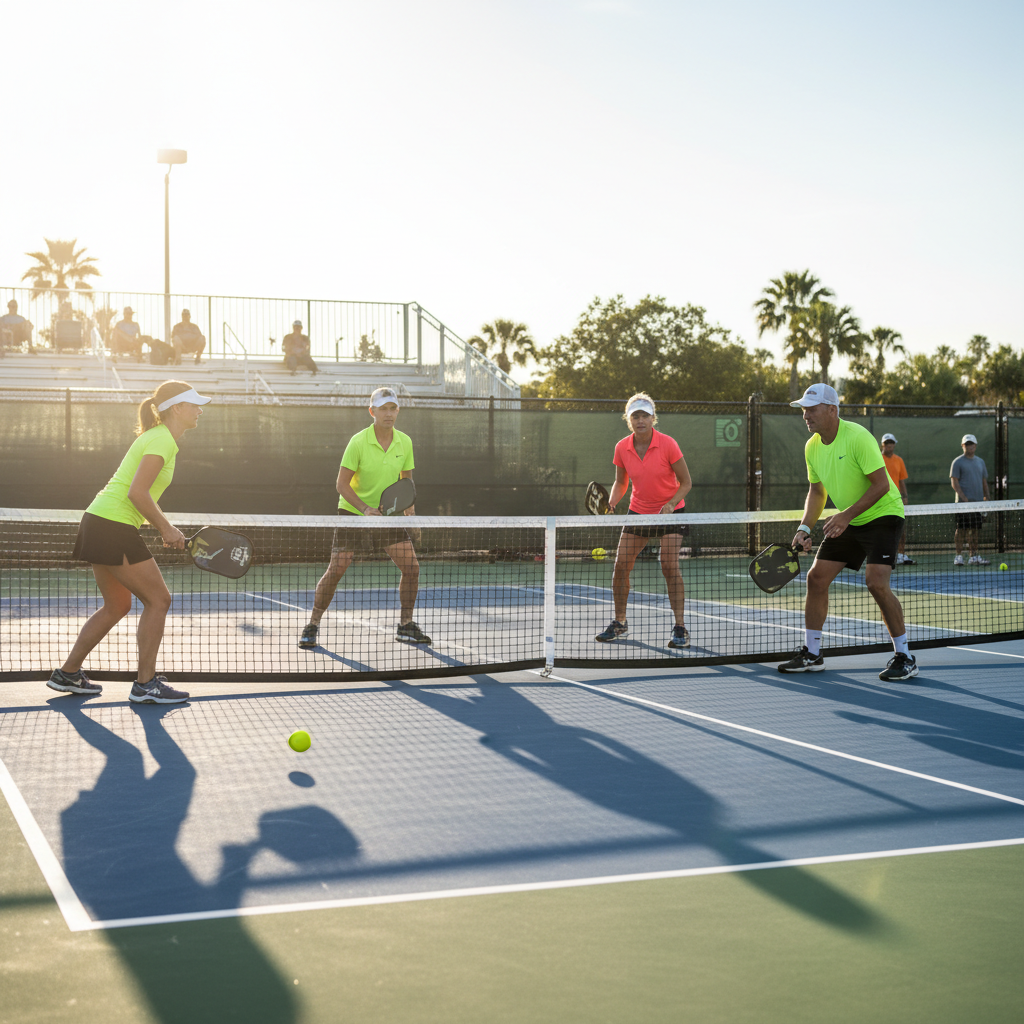
Practice traditional positioning and stacking scenarios. Work on switching smoothly without leaving gaps in your court coverage.
Stacking drill: Practice the stack formation from the serve and return positions. Focus on timing your movement so you’re in position when the ball arrives.
Seamless Partner Coordination
Practice calling balls early and clearly. Work on scenarios where both players could potentially play the ball and establish clear guidelines for who takes what.
Develop trust through repetition. The more you practice together, the better you’ll anticipate each other’s movements and decisions.
What to Avoid: Common Training Mistakes
Don’t practice without purpose. Every drill should have a specific goal. Random hitting might be fun, but it won’t improve your game systematically.
Avoid practicing only your strengths. It’s tempting to work on shots you’re already good at, but addressing weaknesses is what moves you up levels.
Don’t neglect the mental game. Practice decision-making under pressure by adding consequences to your drills or practicing in game-like situations.
Stop practicing bad habits. If you’re consistently making the same mistake, slow down and focus on proper technique rather than just hitting more balls.
FAQ
How often should 4.0 players practice these drills?
Aim for 2-3 focused practice sessions per week, spending 15-20 minutes on each drill type. Quality repetition is more important than quantity. It’s better to do 50 focused third shot drops than 200 mindless ones.
What equipment do I need for these pickleball drills?
You’ll need a bucket of balls, some cones or targets for placement drills, and ideally a practice partner. A ball machine can be helpful but isn’t necessary. Most importantly, use the same paddle you play with in matches.
How long does it take to see improvement?
With consistent practice, you should see noticeable improvement in 2-4 weeks. However, moving from 3.5 to solid 4.0 play typically takes 3-6 months of dedicated practice. Be patient and focus on gradual improvement rather than dramatic changes.
Can these drills help me move to 4.5 level play?
Absolutely. These pickleball drills for 4.0 players build the foundation skills needed for 4.5 level play. Once you master these consistently, you can add more advanced variations and increase the pressure under which you practice them.
Are these drills suitable for solo practice?
Some drills can be adapted for solo practice, particularly serving drills and wall practice for dinking. However, most of these drills require a partner to be truly effective. Consider joining a practice group or finding a regular practice partner with similar goals.