
The third shot drop is arguably the most important shot in competitive pickleball. It’s the bridge between aggressive baseline play and strategic net positioning, separating intermediate players from advanced competitors.
If you’re stuck at the 3.5 level and wondering why you can’t break through to 4.0, mastering this shot is likely your missing piece. Let’s break down everything you need to know about perfecting your third shot drop technique.
Understanding the Third Shot Drop
The third shot drop is a soft, arcing shot hit from the baseline or mid-court that lands in your opponent’s non-volley zone (the kitchen). It’s called the “third shot” because it typically occurs after the serve (first shot) and return (second shot).
This shot serves a crucial strategic purpose. After your opponent returns your serve, they’re already positioned at the net while you’re stuck at the baseline. The third shot drop neutralizes their positional advantage by forcing them to hit up on the ball, giving you time to advance to the net.
Here’s when you should use the third shot drop: - When your opponents are both at the net - After a deep return that keeps you at the baseline - When you need to reset the point and slow down fast-paced exchanges - As your primary transition shot from defense to offense
The alternative is a third shot drive, but this high-risk shot only works when your opponents give you a short return or are positioned poorly at the net.
Proper Grip and Body Positioning
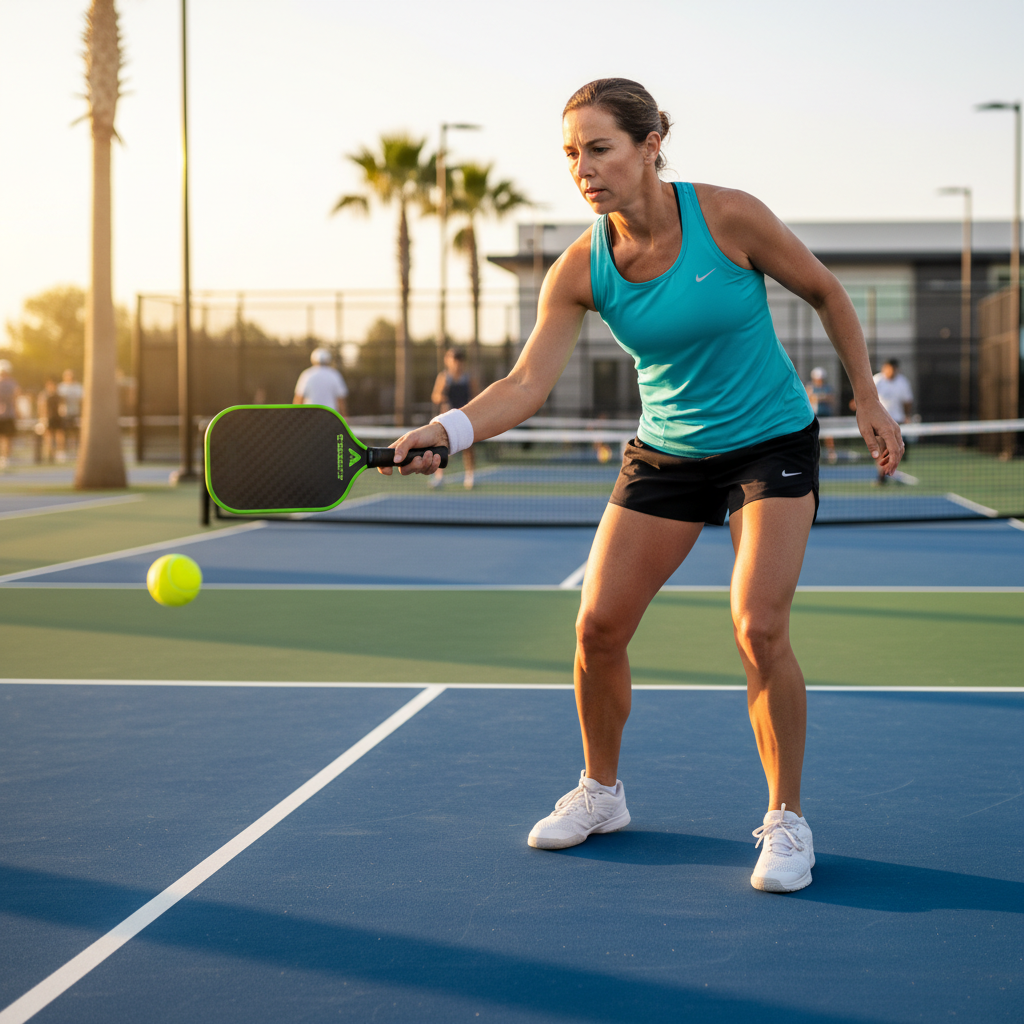
Your grip choice significantly impacts your control and consistency. Most advanced players use a continental grip for third shot drops because it provides the best feel and touch. This grip sits between an Eastern forehand and Eastern backhand grip, allowing you to hit both forehand and backhand drops without changing your grip.
If you’re currently using an Eastern forehand grip, don’t panic. You can still execute effective drops, but you’ll need to be more conscious of your paddle face angle.
Your body positioning starts with your stance. Use an open stance with your feet slightly wider than shoulder-width apart. This gives you better balance and allows for easier weight transfer. Your non-hitting shoulder should point toward your target, creating proper body alignment.
Keep your knees slightly bent and your weight on the balls of your feet. This athletic position allows you to move efficiently and maintain balance throughout the shot. Your paddle should be up and ready, positioned at about chest height.
Paddle Angle and Contact Point
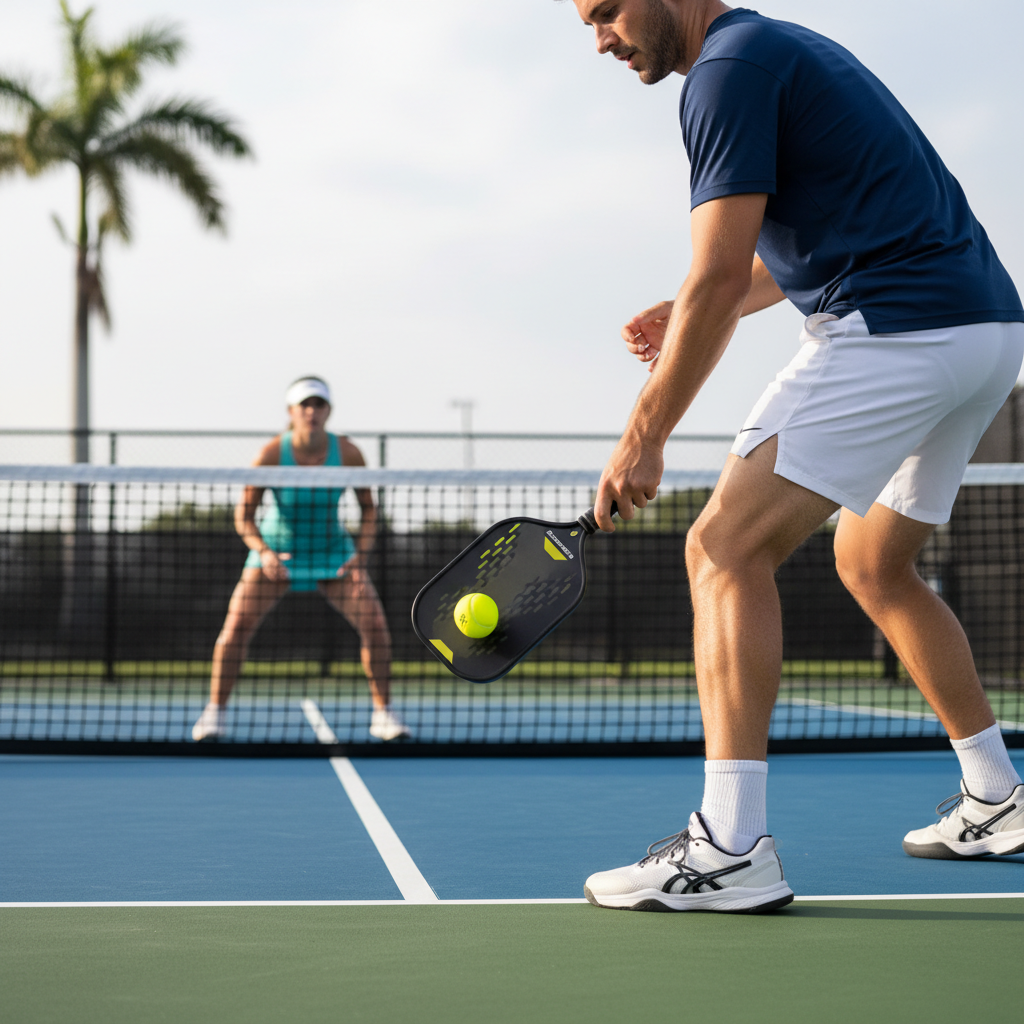
The paddle angle is where most players struggle with their third shot drop technique. Your paddle face should be slightly open (tilted upward) at contact, but not excessively so. Think about a 15-20 degree angle from vertical.
Too closed, and your shot will go into the net. Too open, and you’ll send the ball sailing long. The key is finding that sweet spot where the ball clears the net with 2-3 feet of clearance and drops softly into the kitchen.
Your contact point should be at the peak of the ball’s bounce or slightly on the rise. This timing gives you the best control over the ball’s trajectory. Contact the ball when it’s about waist to chest high, depending on the bounce height.
Avoid letting the ball drop too low before making contact. Low contact points force you to hit up more aggressively, making it harder to control the shot’s arc and landing spot.
Technique Breakdown Step by Step
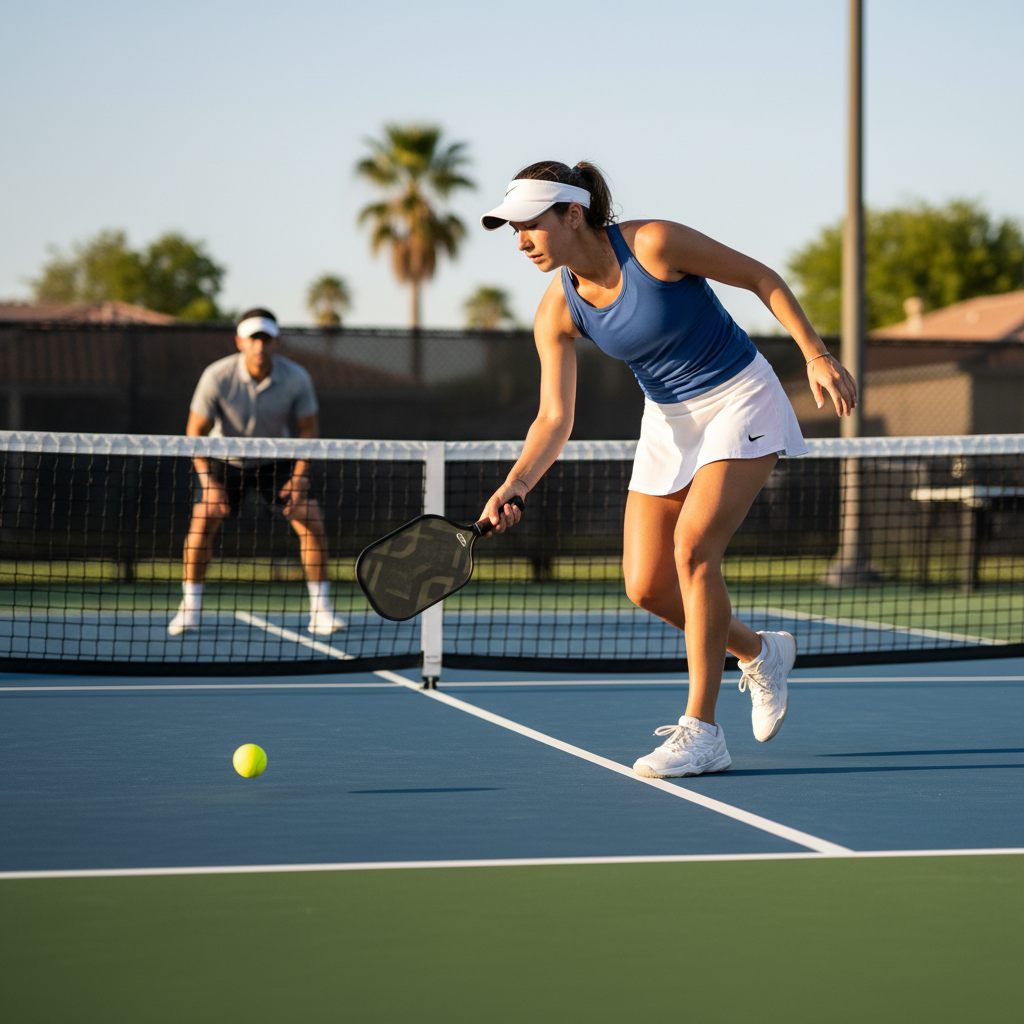
Let’s break down the mechanics of a perfect third shot drop:
Footwork and Weight Transfer: Start with your weight on your back foot as you prepare for the shot. As you begin your forward swing, shift your weight from back foot to front foot. This weight transfer provides the power and control you need without over-hitting the ball.
Take a small step forward with your front foot if needed to get into proper position. Your feet should remain balanced and stable throughout the shot.
Swing Mechanics: Use a pendulum-like swing motion, starting with your paddle low and swinging upward through contact. The swing should be smooth and controlled, not rushed or jerky. Think “low to high” with your paddle path.
Your swing should be compact and controlled. This isn’t a power shot, so you don’t need a big backswing. A shorter, more controlled swing gives you better consistency and accuracy.
Follow-Through and Recovery: After contact, your paddle should continue upward and slightly across your body. The follow-through should be smooth and natural, not forced or cut short.
Immediately after your follow-through, split-step and begin moving forward toward the net. The whole point of the third shot drop is to give yourself time to advance to better court position.
Common Mistakes to Avoid
Over-hitting the Third Shot This is the biggest mistake players make. They try to hit the ball too hard, thinking more pace will make it more effective. The opposite is true. A properly executed drop shot requires touch and finesse, not power.
Focus on letting the ball’s natural bounce provide most of the energy. Your job is to guide the ball, not blast it.
Incorrect Paddle Angle Many players either close the paddle face too much (causing net shots) or open it too much (causing long shots). Practice finding the right angle by starting with an excessively open face and gradually closing it until you find the sweet spot.
Poor Body Positioning Standing too upright or leaning too far forward throws off your balance and timing. Maintain that athletic position with bent knees and proper weight distribution throughout the shot.
Telegraphing Your Shot Don’t make it obvious you’re hitting a drop shot. Use the same preparation and initial movement as you would for a drive. This keeps your opponents guessing and prevents them from cheating forward.
Drills to Improve Third Shot Drop
Target Practice Drill Set up targets (cones, towels, or hula hoops) in different areas of the kitchen. Practice hitting drops to specific targets, focusing on consistency rather than speed. Start with larger targets and gradually make them smaller as your accuracy improves.
Consistency Building Exercise Have a partner feed you balls from the baseline while you practice drops. Aim for 10 consecutive drops that land in the kitchen. Once you can do this consistently, increase the target to 15, then 20.
Live Ball Practice Practice the full sequence: serve, return, third shot drop. This drill helps you work on the timing and rhythm of the actual game situation. Focus on immediately moving forward after your drop shot.
Wall Practice You can practice third shot drops against a wall by yourself. Stand about 15 feet from the wall and practice hitting soft shots that barely reach the wall. This helps develop the touch and feel you need.
Advanced Third Shot Drop Variations
Adapting to Court Position When you’re hitting from deeper in the court, you need more arc on your shot to clear the net and still land soft. From closer positions, use less arc and focus more on placement.
Practice drops from different positions on the court. The technique remains the same, but the execution needs to adapt to your distance from the net.
Reading Opponent Positioning If your opponents are positioned aggressively at the net, aim your drops deeper in the kitchen to keep them back. If they’re hanging back, you can drop shorter and draw them forward.
Watch where your opponents position themselves after the return. Good players will try to anticipate your third shot and position accordingly.
Adding Deception and Spin Once you’ve mastered the basic third shot drop technique, you can add subtle variations. A slight slice spin can help the ball “grab” the court and stay low after the bounce. Topspin drops can be effective but are more advanced and riskier.
The key is mastering the basic shot first. Don’t try to get fancy until you can consistently hit 8 out of 10 basic drops into the kitchen.
FAQ
How long does it take to master the third shot drop? Most players need 3-6 months of consistent practice to develop a reliable third shot drop. However, you should see improvement within the first few weeks. The key is regular practice and focusing on technique over power.
What’s the biggest mistake players make with third shot drops? Over-hitting is by far the most common mistake. Players think they need to hit the ball hard to be effective, but third shot drops require touch and finesse. Focus on letting the ball’s bounce provide the energy while you guide the direction and arc.
Can beginners learn the third shot drop quickly? Beginners can learn the basic concept quickly, but developing consistency takes time. It’s better to master the fundamentals of serving, returning, and dinking before focusing heavily on third shot drops. However, understanding the shot early helps with overall court strategy.
How do I practice third shot drops alone? Use a wall or practice board positioned about 7 feet away. Practice hitting soft shots that barely reach the wall and fall at your feet. You can also use a ball machine or simply drop balls and practice the motion without a target.
What’s the difference between a third shot drop and a dink? A third shot drop is hit from the baseline or mid-court and travels a longer distance with more arc. A dink is hit from closer to the net (usually within the transition zone or at the kitchen line) and travels a shorter distance with less arc. Both require soft touch, but the execution differs based on court position.
Remember, the you learn with the third shot drop will improve your entire game. This shot is your ticket to consistent 4.0+ level play, so invest the time to get it right.