
You’re dominating the dink rally, your opponent sends up a floater, and you know it’s time to attack. But instead of crushing a winner, you dump it into the net or sail it long. Sound familiar?
Here’s the thing: aggressive shots aren’t just about power—they’re about precision timing and proper technique under pressure.
The terminator drill pickleball players use to fix this exact problem. It builds the muscle memory and confidence you need to finish points when the opportunity presents itself.
What Is the Terminator Drill?
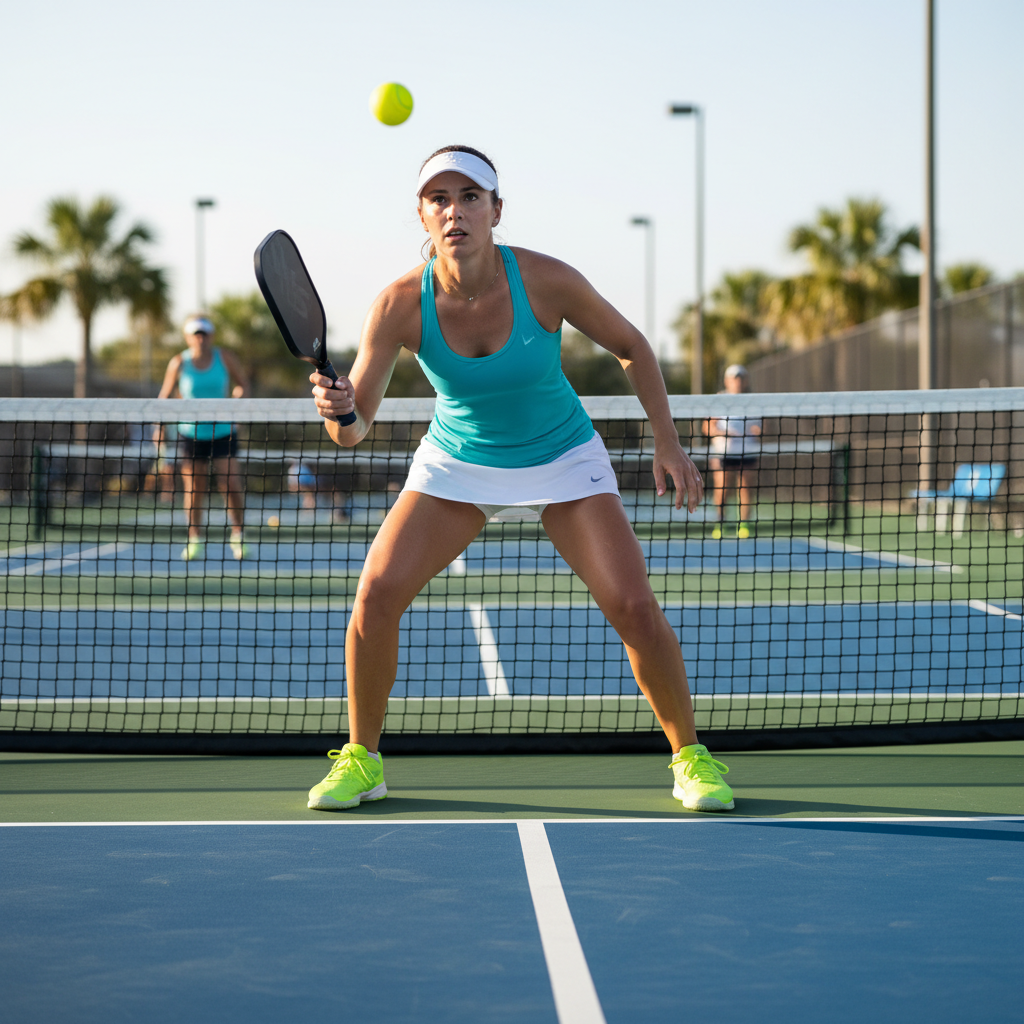
The terminator drill is an aggressive attack training exercise that simulates real-game scenarios where you need to finish points decisively. Players practice attacking high balls with precision placement while maintaining proper form and footwork. This drill specifically targets the transition from patient dinking to aggressive finishing shots.
When to Use the Terminator Drill
Preparing for Tournament Play Tournaments create pressure situations where you need to capitalize on attackable balls. The terminator drill builds the confidence to pull the trigger when you see that floater coming your way.
Developing Offensive Confidence Many 3.5 players struggle with shot selection. They either attack everything or nothing at all. This drill teaches you to recognize the right moment to switch from defense to offense.
Breaking Through Defensive Patterns Opponents who excel at resetting every ball can frustrate even skilled players. The terminator drill helps you develop shots that are harder to reset—angles and pace that force errors.
Improving Shot Placement Under Pressure It’s one thing to hit winners in warm-up. It’s another to place them precisely when the point is on the line. This drill replicates that pressure.
Step-by-Step Drill Execution
Starting Position Setup Stand at the kitchen line in your ready position. Paddle at chest height, weight slightly forward on the balls of your feet. Your partner or coach positions themselves at the opposite kitchen line.
Ball Feed Pattern Your partner feeds you high balls at chest to shoulder height. Start with predictable feeds to your forehand side. The ball should arc about 2-3 feet above net height—perfect attacking territory.
Attack Sequence 1. Split step as your partner contacts the ball 2. Take one crossover step toward the ball if needed 3. Load your paddle back early (before the ball peaks) 4. Contact the ball at its highest comfortable point 5. Follow through toward your target

Target Progression Week 1: Aim for the back third of the court, focusing on depth Week 2: Add sharp crosscourt angles to the sidelines Week 3: Practice down-the-line attacks to the corners Week 4: Mix all three targets unpredictably
Intensity Buildup Start with 67% power, focusing on clean contact and placement. Gradually increase to 83% power as your accuracy improves. Never sacrifice placement for power.
Common Mistakes to Avoid
Incorrect Paddle Angle Most players open their paddle face too much, sending balls long. Keep your paddle face slightly closed at contact. The ball should come off with a slight downward trajectory.
Telegraphing Shots Don’t wind up like you’re hitting a baseball. Keep your backswing compact—no more than 18 inches behind your body. Big backswings give opponents too much time to react.
Inconsistent Footwork Your feet determine your success here. If you’re reaching for the ball, you’re too late. Take that crossover step early, even if it feels aggressive.
Lack of Shot Variety Hitting the same spot repeatedly makes you predictable. Mix up your targets every 3-4 shots. Keep opponents guessing where the next attack is going.
Pro Tips for Mastery
Video Analysis Technique Record yourself from the side angle during drill practice. Watch for these key checkpoints: early paddle preparation, balanced contact position, and complete follow-through. Most players are shocked to see how late they prepare their paddle.
Partner-Assisted Variations Have your partner vary the feed locations after you’ve mastered the basic drill. Mix in backhand feeds, balls to your body, and slightly off-pace deliveries. Real games aren’t predictable.
Mental Preparation Strategy In my experience, the biggest difference between 3.5 and 4.0+ players is decisiveness. When you see that attackable ball, commit fully to the shot. Hesitation kills more attacks than poor technique.
Practice visualization between drill sets. Picture yourself in tournament situations where you need to finish points. Mental rehearsal builds confidence faster than physical reps alone.

Progressive Challenge Method Once you’re hitting 73% of your attacks in bounds, add pressure. Have your partner try to reset your attacks. This teaches you to hit with enough pace and placement to prevent easy resets.
The terminator drill pickleball coaches recommend becomes most valuable when you can execute it under game-like pressure. Worth the extra effort.
FAQ
How long should I practice the Terminator Drill? Dedicate 12-15 minutes to this drill during each practice session. Quality matters more than quantity—stop when your accuracy drops below 67%. Fresh muscles learn faster than tired ones.
Can beginners use this drill effectively? Players below 3.0 should focus on consistent dinking first. However, 3.0+ players benefit greatly from this drill. Start with slower feeds and prioritize form over power initially.
What equipment do I need for the Terminator Drill? Just your paddle, balls, and a practice partner or ball machine. A basket of 20+ balls keeps the drill flowing smoothly. No special equipment required.
How does this drill translate to actual game performance? The muscle memory you build transfers directly to match situations. Players typically see improvement in their attack success rate within 2-3 weeks of consistent practice. The confidence boost is immediate.
Can I modify the drill for different skill levels? Absolutely. 3.5 players should focus on depth and consistency. 4.0+ players can add pace and sharper angles. 4.5+ players should practice attacking lower balls and incorporating deception into their preparation.