
The third shot in pickleball can make or break your rally. While your opponents are positioned at the net after their return, you’re stuck at the baseline trying to work your way forward. This is where mastering the pickleball third shot drop technique becomes your secret weapon.
Let’s break down exactly how to execute this crucial shot with precision and consistency.
Understanding the Third Shot Drop
The third shot drop happens after the serve and return, when you’re hitting from the baseline while your opponents control the net. This shot is your ticket to neutralizing their positional advantage and getting into the rally.
Here’s what separates 3.5 players from 4.0+: understanding that the third shot drop isn’t about winning the point immediately. It’s about buying yourself time to advance to the net and reset the rally on equal terms.
The strategic goal is simple. You want to hit a soft shot that lands in the non-volley zone, forcing your opponents to hit up on the ball. This gives you the opportunity to move forward and establish better court position.
Most players rush this shot or try to hit winners from the baseline. That’s exactly what your opponents want you to do.
Proper Grip and Body Positioning
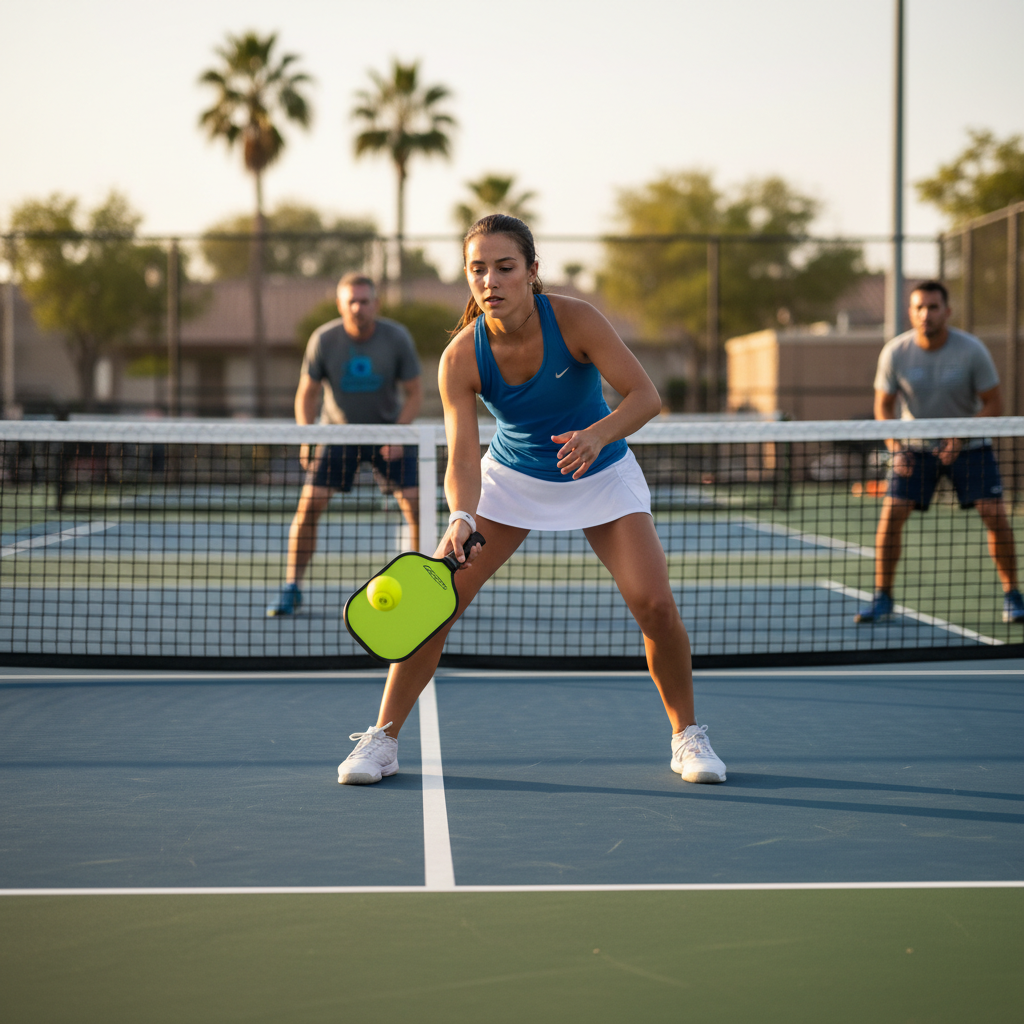
Your grip is the foundation of consistent third shot drops. Use a continental grip - the same grip you’d use for . This grip gives you the most control and allows for subtle adjustments during contact.
Position your body sideways to the net, not square. Your non-dominant shoulder should point toward your target. This sideways stance gives you better reach and allows for a more natural swing path.
Maintain a balanced, athletic stance with your feet shoulder-width apart. Keep your weight slightly forward on the balls of your feet. You should feel ready to move forward immediately after hitting the shot.
Keep your paddle in front of your body throughout the preparation and contact. This positioning gives you maximum control and helps prevent late contact, which leads to mishits.
Executing the Perfect Third Shot Drop
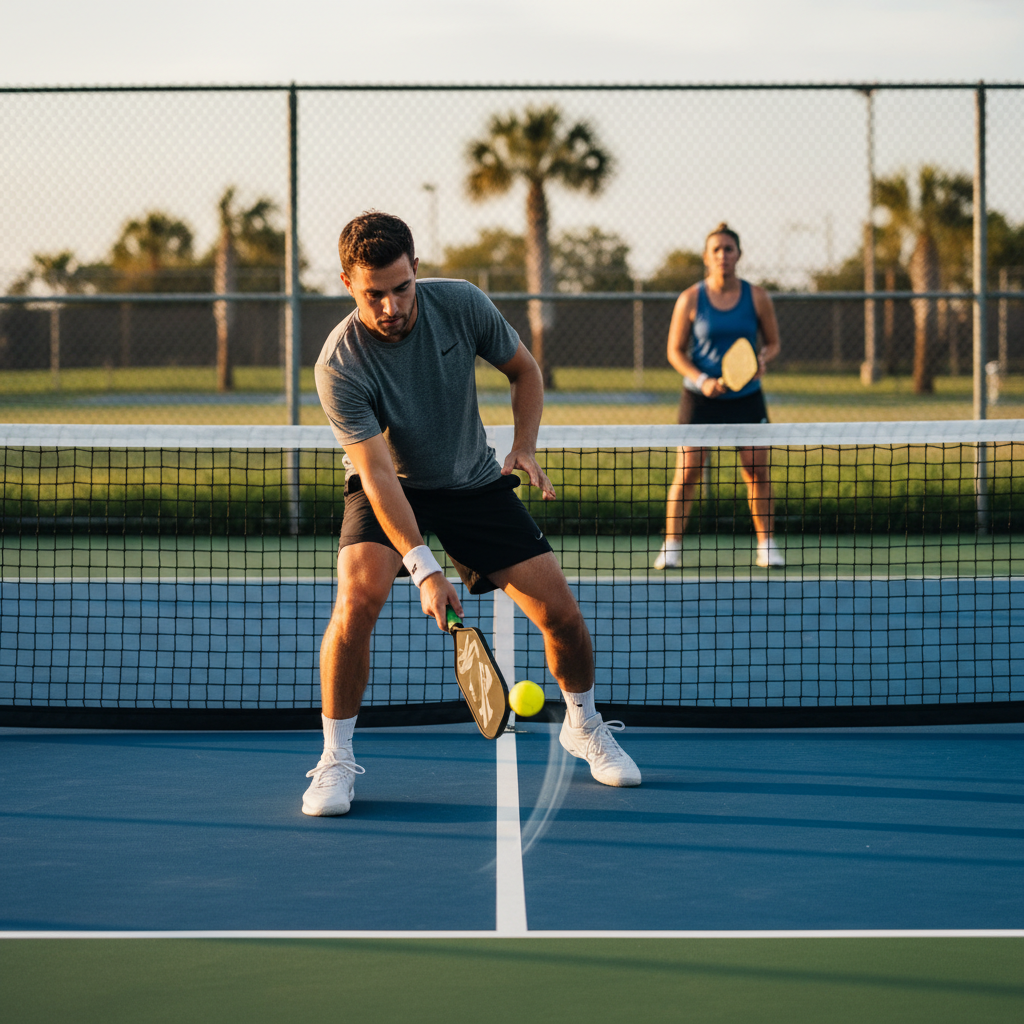
The key to mastering the pickleball third shot drop technique lies in generating soft, controlled contact. Think “caress” rather than “hit” when you make contact with the ball.
Use a gentle lifting motion with minimal backswing. Your paddle should travel in a low-to-high path, but the motion should be compact and controlled. Big backswings lead to inconsistent contact and overpowered shots.
Aim for a high arc with a steep downward trajectory. The ball should peak about 10-12 feet above the net before dropping sharply into the kitchen. This arc gives you margin for error while still clearing the net consistently.
Target just over the net into the non-volley zone, ideally within 3-4 feet of the net. Don’t aim for the baseline of the kitchen - that gives your opponents too much time to move forward and attack.
Pro tip: Focus on the follow-through. Your paddle should finish pointing toward your target, and your body should be moving forward as you complete the shot.
Common Mistakes to Avoid
This is where most players go wrong: hitting the ball too hard or too flat. The third shot drop requires finesse, not power. If your shots are consistently sailing long or hitting the net, you’re likely using too much force.
Failing to follow through properly is another major error. Many players decelerate through contact, which leads to inconsistent ball flight and poor placement. Maintain smooth acceleration through the entire swing.
Incorrect body alignment kills your consistency. If you’re facing the net square-on or leaning backward during contact, you’ll struggle with accuracy. Stay sideways and commit to moving forward after the shot.
Don’t telegraph your shot to opponents. Keep the same preparation for both drops and drives from the baseline. This keeps your opponents guessing and prevents them from cheating forward.
Drills to Improve Your Third Shot Drop
Practice target drills with markers placed in the kitchen. Set up cones or targets 2-4 feet from the net and practice hitting 20 consecutive drops into this zone. Start close to the net and gradually move back to baseline distance.
Use video analysis to refine your technique. Record yourself hitting third shot drops and compare your form to professional players. Look specifically at your grip, stance, and swing path.
Work with a partner to simulate realistic game scenarios. Have them hit returns from the baseline while you practice third shot drops. This adds pressure and helps you develop timing under game-like conditions.
Develop muscle memory through repetitive practice. Hit 50-100 third shot drops each practice session. Consistency comes from repetition, and this shot requires thousands of repetitions to master.
Practice to improve your movement after hitting the drop. The shot is only half the battle - you need to advance to the net efficiently after contact.
FAQ
How high should the third shot drop arc be? The ball should peak at 10-12 feet above the net. This height gives you enough clearance while still allowing for a steep downward angle into the kitchen.
What’s the most common error when attempting a third shot drop? Hitting the ball too hard. Most players use too much force, causing the ball to sail long or sit up for easy attacks. Focus on soft, controlled contact.
How can I practice third shot drops alone? Set up targets in the kitchen and practice from various baseline positions. You can also use a ball machine or hit against a wall, focusing on consistent arc and soft contact.
How do wind conditions affect the third shot drop? Headwinds help by slowing the ball down, while tailwinds can carry shots long. Adjust your arc accordingly - higher in tailwinds, slightly lower in headwinds.
At what skill level should players master this technique? Players should start working on third shot drops at the 3.0 level, but true mastery typically develops between 3.5-4.0. It’s essential for advancing beyond recreational play into competitive pickleball.