
You’re locked in a dinking rally, trying to stay patient at the kitchen line. Your opponent keeps hitting straight-ahead dinks, and you’re running out of angles to work with. You end up hitting into the net or popping one up for an easy put-away.
Here’s the thing: the crosscourt dink is your escape route from these neutral rallies—and your path to controlling the point.
The crosscourt dink pickleball technique opens up the court, creates difficult angles for your opponent, and gives you more margin for error over the net. Whether you’re a 3.5 looking to add variety to your dinking game or a 4.0+ player refining your touch, mastering this shot will transform how you play at the kitchen line.
What Is a Crosscourt Dink
A crosscourt dink is a soft, diagonal shot hit from one side of the court to the opposite side, landing in your opponent’s kitchen zone. Unlike straight-ahead dinks, this shot travels at an angle across the net, creating wider court geometry and forcing your opponent to cover more ground.
The shot combines precision placement with strategic positioning. It’s both a defensive tool to neutralize aggressive opponents and an offensive weapon to set up winning opportunities.
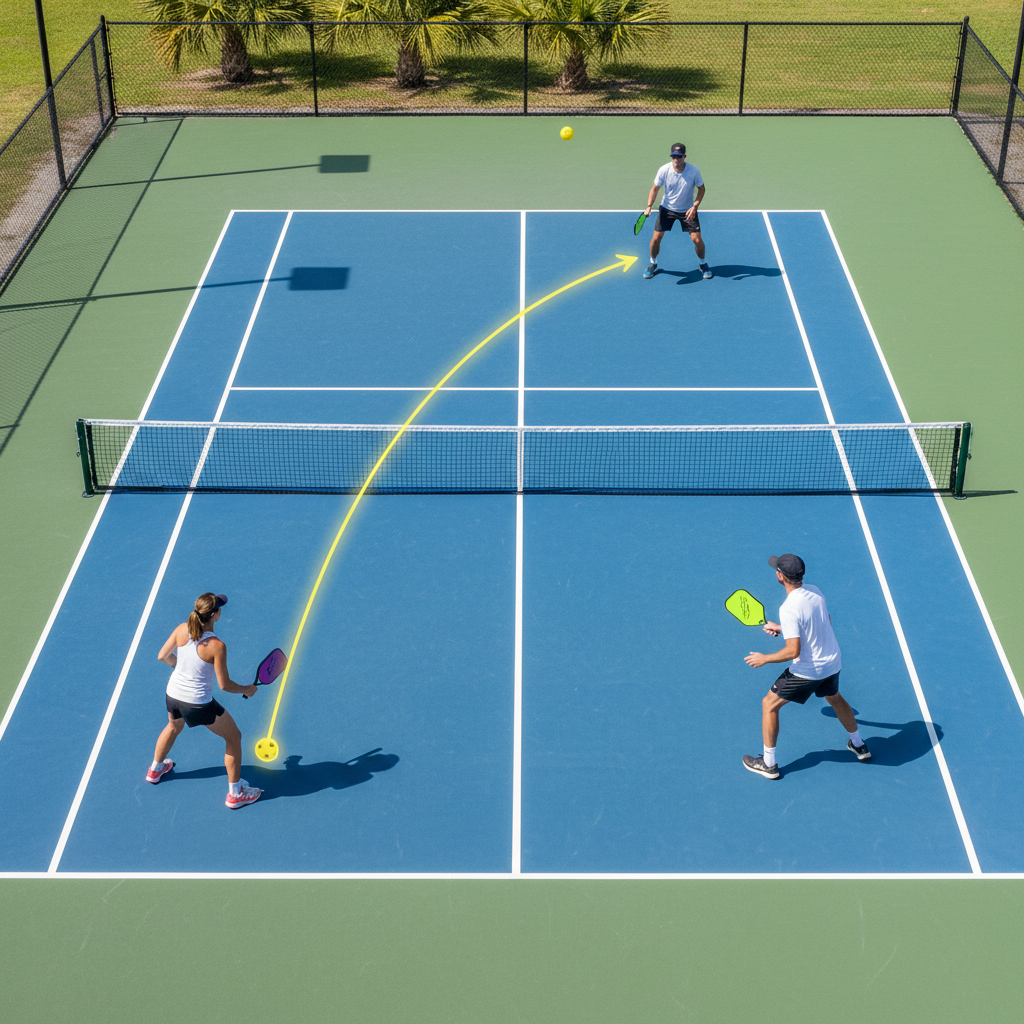
When to Use the Crosscourt Dink
The crosscourt dink shines in specific tactical situations. Let’s break down when this shot becomes your best option.
Neutralize Aggressive Net Players
When your opponent crowds the kitchen line and attacks every straight dink, the crosscourt angle forces them to move laterally. This lateral movement disrupts their aggressive positioning and gives you time to reset the point.
Create Court Geometry
Crosscourt dinks open up sharper angles than straight shots. The diagonal path creates a 23% wider target area compared to hitting straight ahead, giving you more room for error while still maintaining pressure.
Force Opponent Movement
A well-placed crosscourt dink to the outside corner pulls your opponent off-center. This opens up the opposite side of the court for your next shot. It’s particularly effective against players who plant themselves in one spot.
Reduce Net Risk
The crosscourt trajectory naturally clears the net with more margin. While the net height is 34 inches at the posts and 36 inches in the center, your crosscourt angle gives you an extra 2-3 inches of clearance.
Step-by-Step Crosscourt Dink Execution
Perfect execution starts with proper preparation. Here’s how to hit consistent crosscourt dinks that land exactly where you want them.
Setup and Grip
Position yourself 18-24 inches behind the kitchen line in your athletic ready position. Use a continental grip with your paddle face slightly open—about 15-20 degrees from vertical.
Keep your knees bent and weight on the balls of your feet. Your non-paddle hand should point toward your target for balance and direction.
Paddle Preparation
Take a minimal backswing—no more than 8 inches behind your body. The key is controlling the paddle face angle throughout the entire stroke.
Open your paddle face toward your target corner. If you’re hitting crosscourt from your forehand side, angle the face toward their backhand corner.
Contact Point and Follow-Through
Make contact at knee height, about 12 inches in front of your body. This forward contact point gives you better control over direction and trajectory.
Use a gentle upward motion through contact, lifting the ball just enough to clear the net by 6-12 inches. Your follow-through should be short and controlled—about 6 inches past contact.
Target Placement
Aim for the outside third of your opponent’s kitchen. This placement forces maximum movement while keeping the ball in play. Too close to the sideline risks going out; too close to center reduces the strategic advantage.

Common Crosscourt Dink Mistakes
Even experienced players make these critical errors. Avoiding them will immediately improve your crosscourt dink success rate.
Hitting Too Hard
The biggest mistake is treating the crosscourt dink like a regular groundstroke. Excessive pace reduces your control and gives your opponent an easier ball to attack.
Keep your swing speed at about 30% of your normal groundstroke pace. The goal is placement, not power.
Inconsistent Paddle Angle
Many players change their paddle face angle mid-swing, leading to erratic shot direction. Lock in your paddle angle during preparation and maintain it through contact.
Practice shadow swings focusing solely on keeping your paddle face consistent. This builds muscle memory for match situations.
Poor Body Positioning
Standing too close to the kitchen line limits your reaction time and shot options. Position yourself 18-24 inches back to give yourself room to move forward into the shot.
Avoid leaning too far forward during the stroke. This creates balance issues and reduces your ability to recover for the next shot.
Telegraphing Shot Direction
Obvious preparation gives your opponent too much time to anticipate and move. Use the same setup for both straight and crosscourt dinks.
Keep your body position neutral until the last moment. Your paddle preparation should look identical regardless of your intended direction.
Advanced Crosscourt Dink Strategies
Once you’ve mastered the basic technique, these advanced concepts will elevate your crosscourt dinking to the next level.
Vary Height and Speed
Don’t hit every crosscourt dink with the same trajectory. Mix in some that barely clear the net (3-4 inches) with others that arc higher (8-10 inches).
The low dinks force quick reactions, while higher ones give you time to recover position. This variation keeps your opponent guessing and prevents them from timing your shots.
Use Deception
Advanced players disguise their crosscourt dinks until the last second. Keep your paddle preparation identical for straight and crosscourt shots.
The key is in your wrist action at contact. A subtle wrist turn at the last moment can redirect a shot that looked like it was going straight ahead.
Read Opponent Positioning
Watch where your opponent sets up after each shot. If they consistently favor one side of the court, exploit the open space with your crosscourt placement.
Look for players who don’t recover to center position. These opponents give you larger target areas for your crosscourt dinks.
Practice Changing Trajectory
Work on hitting crosscourt dinks from different court positions. A crosscourt from the center of the court requires different angles than one from the sideline.
Spend 15 minutes each practice session hitting crosscourt dinks from various starting positions. This builds adaptability for match situations.

Pro Tips for Crosscourt Dink Mastery
In my experience coaching competitive players, these insights make the biggest difference in crosscourt dink effectiveness.
Master the Soft Touch
The crosscourt dink requires exceptional touch and feel. Practice hitting balls that land within 6 inches of your target consistently.
Set up cones or targets in your opponent’s kitchen corners and aim for 73% accuracy during practice. This translates to reliable execution under match pressure.
Develop Court Vision
Great crosscourt dinkers see the entire court, not just their target. Watch your opponent’s positioning and movement patterns throughout the rally.
Look for subtle weight shifts that telegraph their next move. This information helps you place your crosscourt dink in the most advantageous location.
Use the Crosscourt Series
Don’t just hit one crosscourt dink and stop. Create sequences that move your opponent around the court systematically.
Try this pattern: crosscourt dink to their backhand, straight dink to their forehand, then crosscourt again. This creates maximum court coverage and opens up attack opportunities.
What I’ve found most effective is practicing crosscourt dinks for 20 minutes daily, focusing on placement over pace. The investment pays off quickly in match situations.
FAQ
How do I improve crosscourt dink accuracy?
Focus on consistent paddle face angle and contact point. Practice hitting to targets placed in the kitchen corners, aiming for 67% accuracy before moving to live ball drills. Use a metronome set to 60 BPM to develop rhythm and consistency.
What’s the ideal paddle angle for crosscourt dinks?
Open your paddle face 15-20 degrees from vertical, angling toward your target corner. The exact angle depends on your contact point and desired trajectory, but this range provides good control while clearing the net safely.
Can crosscourt dinks work in both singles and doubles?
Yes, but the strategy differs. In doubles, crosscourt dinks create opportunities for your partner to poach or attack. In singles, they’re primarily used to move your opponent and create court positioning advantages.
How do I practice crosscourt dinking effectively?
Set up targets in both kitchen corners and alternate hitting crosscourt dinks from different court positions. Practice 50 repetitions from each side daily, focusing on landing within 12 inches of your target. Progress to live ball rallies once you achieve 60% accuracy.
What are the biggest risks of crosscourt dinks?
The main risks are hitting too wide (out of bounds) or leaving the ball short and high for an easy attack. Maintain conservative placement 18 inches inside the sideline and focus on consistent net clearance of 6-8 inches to minimize these risks.